
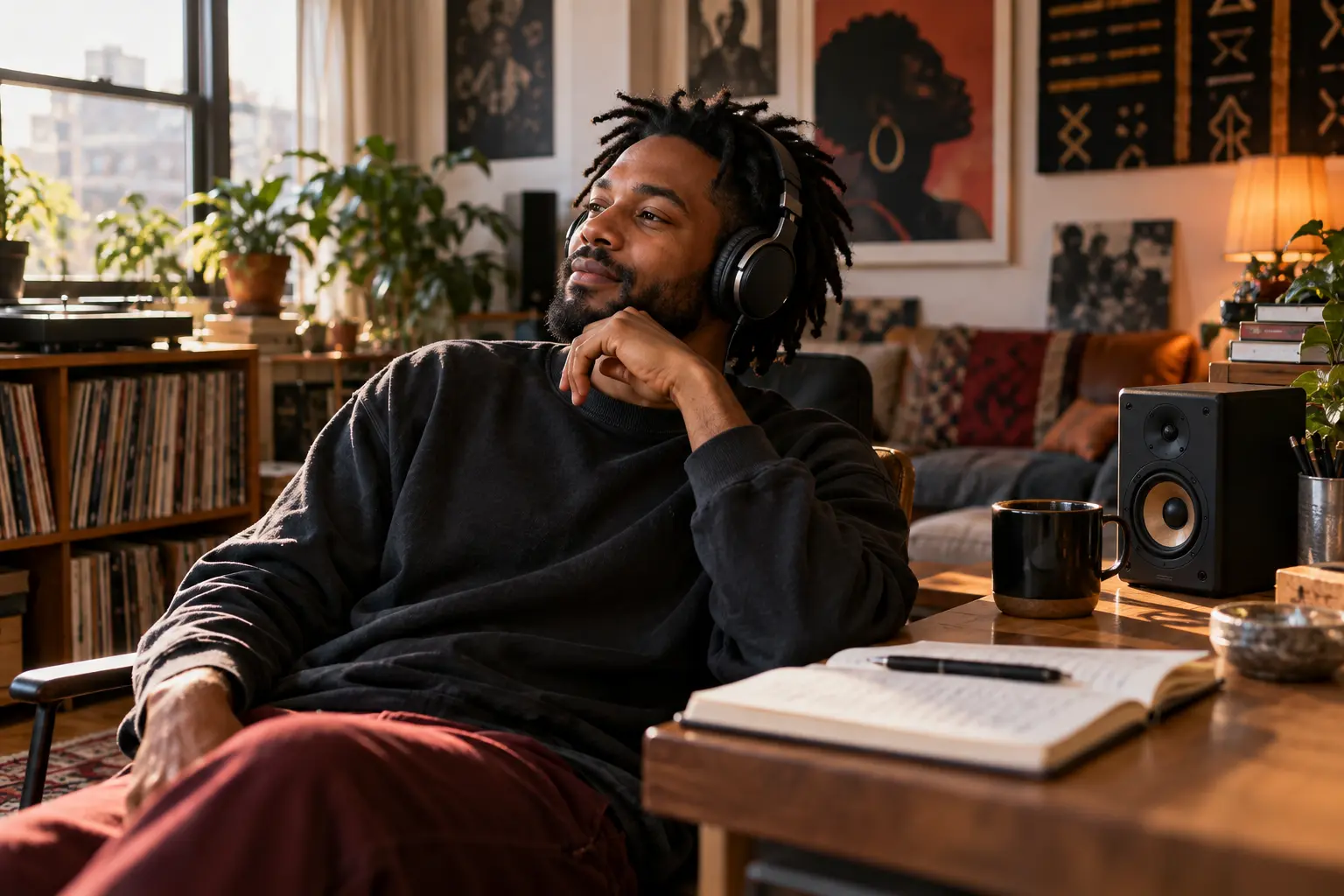
Hip-hop rewards attention. The low end has movement, the drums carry texture, and a vocal can change character from one bar to the next. None of that requires blasting your headphones. A better listening routine protects your ears and often makes it easier to notice the choices inside a track.
The goal is not to turn music into a medical checklist. It is to give yourself a few controls you can repeat whenever you listen live to IHHR. This is general listening guidance, not personal medical advice.
Start lower than your impulse tells you
Set the volume before the beat drops, then leave it alone for a few minutes. Your ears adjust to the level around you, so turning the control up every time a quieter song arrives can quietly push the whole session louder. Use the IHHR player’s volume slider or your device’s sound-exposure feature instead of relying on a percentage alone; the same percentage can produce different sound levels on different headphones.
The World Health Organization’s safe-listening guidance uses 80 decibels for up to 40 hours per week as an adult reference point. For every 3 dB increase, the recommended weekly listening time is cut in half. That is why a small jump in level matters more than it may feel in the moment.
Make loud surroundings do less work
A noisy bus, gym, or room can tempt you to raise the music until it wins. Well-fitting headphones—or noise-canceling headphones when appropriate—can reduce that temptation. They do not make any volume automatically safe, but they can help you hear detail without fighting the environment.
If you are listening through speakers, step back from them rather than using the closest seat. At a live event, move away from the speaker stacks and use properly fitted hearing protection. Your favorite bass line should feel physical because of the production, not because your ears are being overloaded.
Use a break that actually resets the session
After about an hour, pause for ten quiet minutes. WHO recommends that kind of recovery break, and it is easy to build into a listening session: stop the stream, stretch, get water, and let the room be quiet. When you return, restart at a modest level instead of matching the volume you had grown used to.
That break can improve your attention too. Write down one track, lyric, drum pattern, or vocal detail you want to remember. Our three-pass guide to giving useful track feedback turns those notes into something more specific than “this is fire.” If the sound you noticed involved a new production method, the AI-assisted music credit checklist shows what artists can document.
Pay attention to warning signs
Ringing, buzzing, pain, or muffled hearing after a session is a reason to stop and give your ears quiet time. If symptoms persist or repeat, contact a qualified hearing professional. Do not use another loud track to test whether the problem has passed.
Devices that show weekly sound exposure can be useful because they turn an invisible habit into something you can check. Treat the warning as information, not an obstacle to dismiss. A lower level today protects your ability to hear the contrast, space, and detail that make tomorrow’s record worth discovering.
A simple IHHR routine
- Press Play on the IHHR listener page and begin at a comfortable level.
- Keep the level steady for the first few songs; avoid chasing every change in loudness.
- After an hour, take ten quiet minutes and note one detail you want to discuss.
- Return at a modest level, then share a specific thought in the IHHR live chat if you want company while you listen.
Explore more listening and artist guides in The Signal. A safer session is not a lesser session—it is how you stay available for the next discovery.
Source: World Health Organization, “Deafness and hearing loss: Safe listening”, accessed October 5, 2026.
Press Play above to hear IHHR or visit the official Live365 station page.